It’s not just about the large currencies anymore, like the euro or the U.S. dollar. Emerging markets are now having an effect on the global forex market. They offer traders both opportunities and challenges. As economies grow quickly, technologies become more common, and global trade evolves, the Brazilian real and Chinese yuan are growing more popular. This means that these currencies are becoming more important. Market Investopedia says that forex trading in developing world markets is risky but may also be very rewarding. Modern traders shouldn't ignore these markets.
What You Need to Know About Emerging Markets in Forex
Emerging markets are countries with economies that are growing quickly, like Brazil, India, Mexico, and China. Investing in these countries is getting a lot of attention throughout the world. The currencies in these areas are gaining stronger and getting more attention from around the world, which is making them more important to the currency market.
Emerging market forex gives traders new chances to trade FX. A lot of these currencies have higher interest rates than those in developed markets. This makes them ideal for carry trade methods, in which you borrow money in a currency with a low interest rate and invest it in a currency with a higher interest rate. At the same time, EM currency pairs are usually more volatile than big pairs like EUR/USD. This means that they can move quickly, which is both risky and rewarding. Beginners should be careful with them and use the right risk tools. Investopedia says that when trading in these unstable markets, you need to know about economic growth, political events, and money flows.
Important Factors That Affect EM
Emerging markets are changing the FX world since they are strong in a growing market. We can think about the most important ones that are making their influence grow.
Growth of the Economy
Most of the EM countries are expanding faster than the developed countries. This change makes their currencies more attractive to forex traders who wish to hold onto them for a long time.
Trade and Demand Around the World
As global trade changes, countries like China, Mexico, and Brazil are becoming key exporters. Their increasing trade volumes raise the demand for local currencies, which makes the forex market more volatile and opens up more trading opportunities.
Money from Other Countries Coming In
Investors often look for higher returns in emerging economies and emerging market debt. These inflows, which include interest in an emerging market bond ETF, make the local currencies stronger, and the EM assets become important in global FX movements.
These factors together explain why traders all across the world are paying more and more attention to currencies from emerging markets.
Trends in Currency in Emerging Markets
One of the biggest developments in the forex market right now is the developing market currency . Along with the U.S. dollar and euro, traders are paying more and more attention to pairs like USD/BRL (Brazilian real), USD/MXN (Mexican peso), and USD/TRY (Turkish lira). As the globe alters its needs, these currencies are growing more popular. Trends often follow the flows in a global emerging markets fund.
Opportunities for Carry Trade
Higher interest rates in most emerging nations make carry trades more appealing. Traders borrow money in currencies that don't pay much interest, like the Japanese yen, and invest it in currencies that do pay more interest, like EM currencies.
What Happens When the Dollar Weakens
The currencies of emerging markets tend to go up as the U.S. dollar goes down. This shift brings in more traders to EM pairs and an emerging markets fund, which raises trading volumes and liquidity.
Changes in Currency Value
Currency volatility, on the other hand, is a constant trait. Sudden changes in policy, inflation, or geopolitical risk can cause significant movements. This is very important for newbies who want to trade EM pairings.
What De-Dollarisation Means
The de-dollarisation movement is one of the most important trends in the currency market. This means that certain countries are using the U.S. dollar less for commerce and reserves.
Using Local Money in Trade
More and more, China, Brazil, and Russia are using their own currencies for cross-border transactions. This gives the currencies of emerging markets more power and presence in international trade.
The Rise of Digital Currencies
Central bank digital currencies (CBDCs) are also helping emerging nations make international payments faster and cheaper.
Traders see this pattern as a sign that there are more forex chances outside of the dollar. Keeping an eye on these changes will help you find new trade opportunities in time.
Traders' Chances and Risks
Trading currencies from emerging markets can be exciting because their prices tend to move more than those of major pairs like EUR/USD or GBP/USD. For someone who is new to this, it means more chances to make money if the market is good for them.
Chances
One of the main benefits is diversification. Adding EM currency pairs like USD/BRL or USD/MXN to a trading plan will make it less reliant on a few main currencies. Most of the rising economies also have higher interest rates, which make carry trades more profitable. The rise in global trade and investment flows into these countries gives them even more of a boost, and their currencies become more active in the forex market. When they aren't trading FX directly, many traders also look at emerging markets funds, an emerging markets equity fund, a global emerging markets fund, the fidelity emerging markets index fund, an emerging markets fund, or a simple emerging market fund for longer-term allocation. Researching the best emerging market funds or even the best emerging markets fund can help with a currency strategy.
Dangers
The other side is volatility. Emerging markets are more likely to be affected by changes in politics, inflation, or abrupt government actions. These kinds of shocks can cause currency prices to change quickly and dramatically. Another issue is liquidity; not all EM pairings will trade as easily as big pairs, which means that spreads will be wider.
As a newbie, the most important thing you can do is take risks. Stop-loss orders, reduced position sizes, and demo accounts are some of the instruments that might help you limit your losses. By analyzing the pros and cons, traders will be able to enter the emerging market forex with confidence and protect their money.
Helpful Advice for Trading EM Currencies
It can be profitable to trade in currencies from emerging markets, but you need to pay more attention to it. Here are some simple recommendations to get you started:
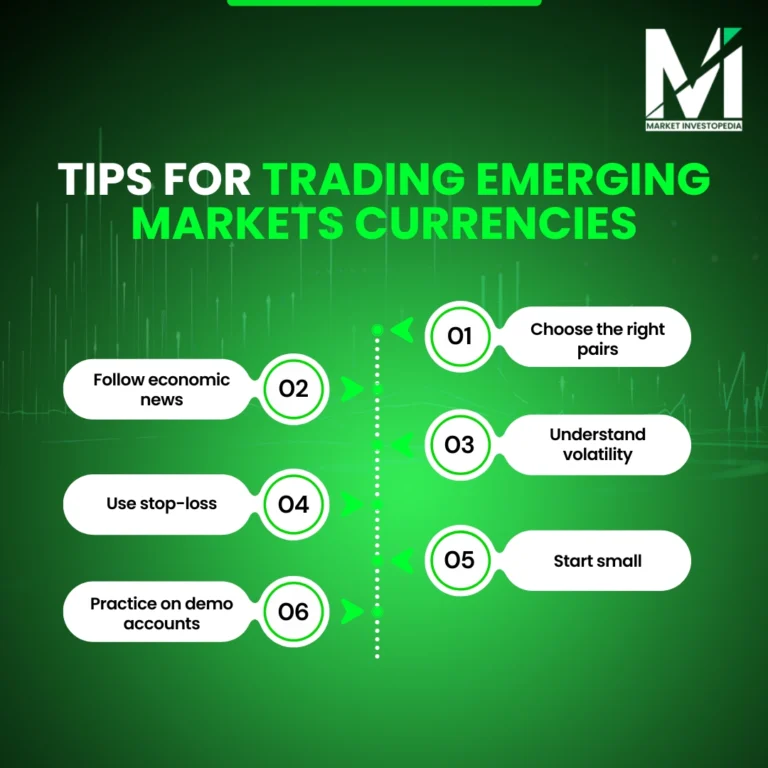
Pick the Right Pairs
Pay attention to liquid pairs like USD/BRL (Brazilian real), USD/MXN (Mexican peso), or USD/TRY (Turkish lira). People tend to trade these more.
Keep Up with the Latest on the Economy
Keep an eye on the emp schedule, inflation, interest rates, and trade data. These news tend to make EM currencies go up.
Know What Volatility Is
There will probably be bigger swings than in key pairs. You should always be ready to deal with changes in the market.
Place Stop-Loss Orders
Set exit points to protect your capital. This is really crucial in EM markets that aren't stable.
Begin Small
Start with smaller bets until you learn how these currencies react to news and changes in the world.
Use Sample Accounts to Practice
Before you trade with real money, try out your methods in a safe place.
These steps can help new traders in developing market forex feel more sure of themselves and lower their risks.
In Conclusion
Emerging markets are no longer on the outside; they are changing the currency market by growing quickly, having stronger currencies, and doing more business with other countries. For traders, it's about having more chances and more risks, which requires smart planning. MarketInvestopedia says that the most important things to know when trading EM currencies are the economic factors that affect them and how volatile they are. Beginners should stay up to date, practice, and adapt to the changing trends in the globe. If you want to learn more or need help getting started, you can always get in touch with us.
Comments
Post a Comment